
A department's real process, drawn as it runs today and reworked so AI takes the steps it handles best.
Dropping an assistant into a tired process often adds a step instead of removing one. The better path is to see how the work moves and decide where a person must stay and where a machine can take over.
PRESWERX consultants sit with teams across Milwaukee at their own desks, follow one piece of work from request to result, and draw it with the people who do it, including the handoffs, waits, and rework nobody wrote down.
Together you redesign it: steps removed, steps handed to AI, steps a person keeps, and the reviewer who signs off. The team tries the new version before anyone calls it final.
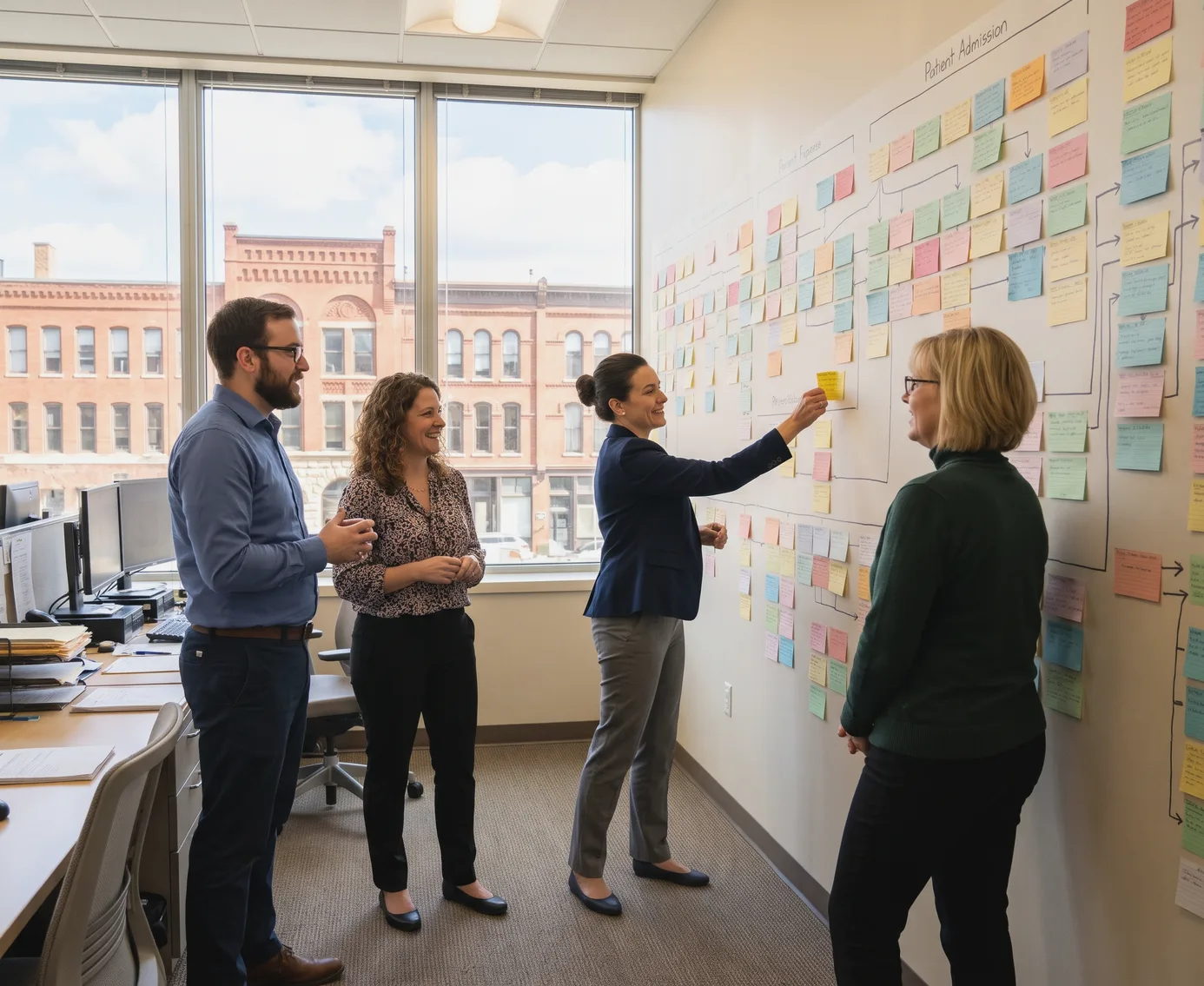
We trace one real request through every desk it touches and note where it waits.
The team decides which steps vanish, which move to AI, and which a person always keeps.
The new process runs on live work with the reviewer watching, and the team revises whatever did not fit.
A legal department traces how requests arrive by email, then sets one intake step where an assistant sorts and summarizes each request for an attorney.
A registrar's staff map where transcript requests stall and move the routine checks to an assistant, while a staff member signs each release.
A controller and the accounting team trace each task in the close, hand the matching of supporting documents to an assistant, and keep the final review for people.
A physician group maps how new patient forms pass between front desk and billing, and cuts duplicate entry with an assistant that drafts while staff confirm each record.
No. We pick one process in one department, and the team decides how much to change.
The people who do the work, their supervisor, and anyone who receives the result. They know the delays nobody documented.
Sometimes. The map shows which steps move to AI and which stay with people, and the team reviews that division before anything changes.
The team runs it on live work with the named reviewer watching, and compares the results with the old way.
Yes, one after another. The first redesign becomes a pattern that the next department can copy.
The map follows the work wherever it goes. Leaders from each office join so that every handoff is accounted for.