
Senior leaders work with AI on their own material, so they can steer a rollout from experience and not from slides.
Executives set the direction for AI, yet many have only seen it in a demo. A briefing puts it in their hands, using the board packet, the operating report, or the policy draft already waiting on their desks.
Your PRESWERX consultant visits Milwaukee executive teams at their own offices and builds the session around real material, so the CEO, CFO, general counsel, and chief of staff can see for themselves what an assistant does well, where it slips, and which questions it cannot answer.
Everyone leaves able to ask sharper questions of their departments, to recognize a weak output, and to explain the organization's position on AI to staff, directors, and the board.
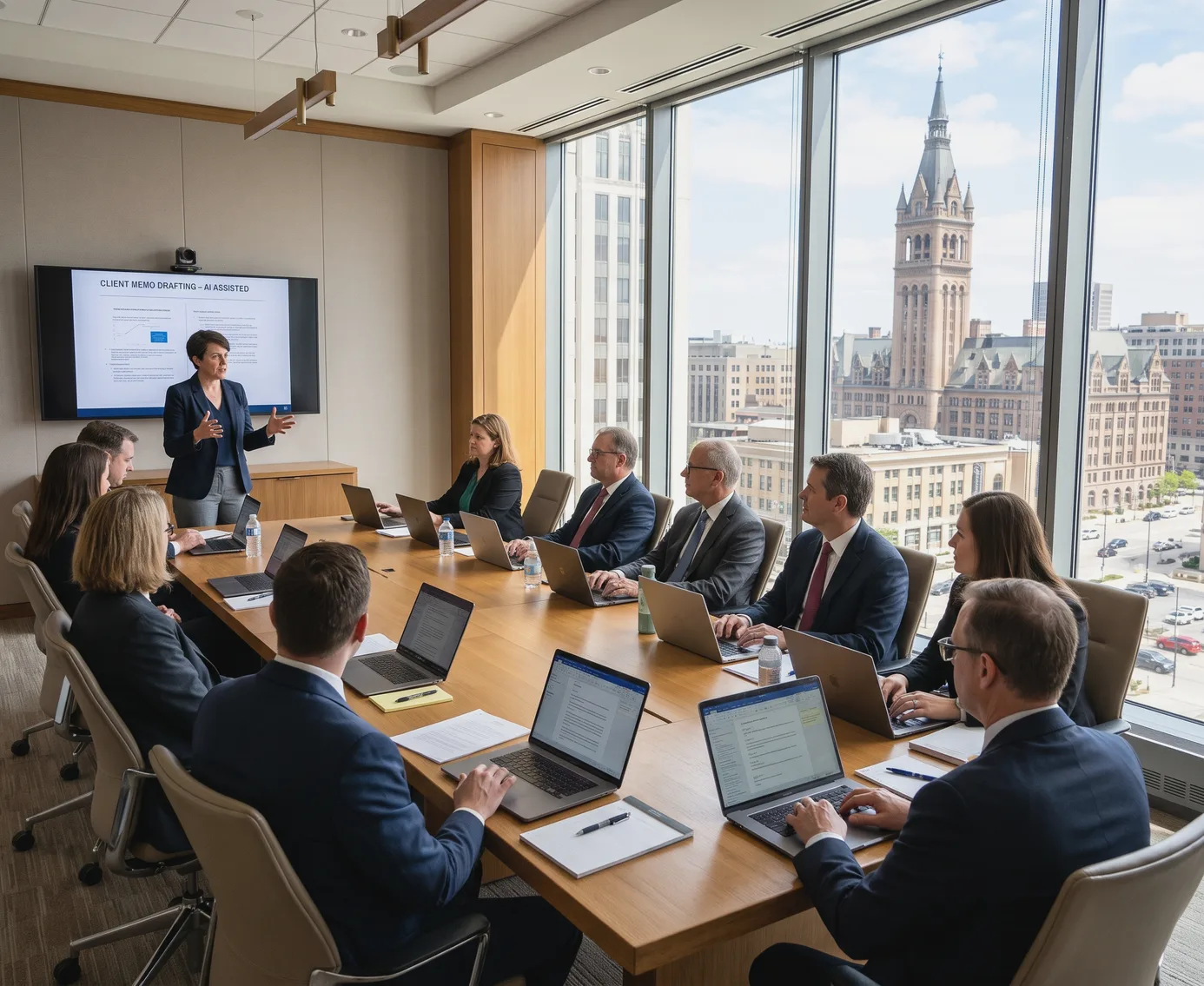
Leaders pick real papers for the session: a board packet, an operating report, a policy draft, or a client letter with nothing sensitive in it.
Each executive tries an assistant on that material while the consultant points out strong results and the usual ways a draft goes wrong.
The group agrees on the questions it will ask of departments and the position it will state to the rest of the organization.
The principals of an architecture firm run a draft pursuit summary through an assistant and learn which claims it invents. They leave with a rule that every figure is checked against the project file.
Executives of a health system ask an assistant to summarize a monthly operating report, then compare the summary with the source. They see where it helps and where a finance leader must still step in.
A university cabinet drafts a revision to an internal policy with an assistant, then rewrites the parts it got wrong. The exercise shows why the registrar and counsel review such text first.
The leaders of an insurer give an assistant a portfolio brief and press it with follow-up questions. They learn that a confident answer still needs a named person to verify it.
None. The session is built around work leaders already do, such as reading a report or editing a letter, and the consultant handles anything technical.
Yes. A session can be shaped for directors, with attention to oversight, risk, and the questions a board should expect management to answer.
Your leaders choose. Many bring material with nothing sensitive in it, and we never ask for anything a leader would rather keep out of the room.
The structure is shared, but each person works on a document from their own role, so the CFO, general counsel, and chief of staff each practice on something that matters to them.
That is useful to see. The consultant brings the disagreement into the open, ties each view to an example from the room, and helps leaders record where they agree.
No. It is practice with AI models your organization may already license, and the consultant is as ready to point out limits as strengths.